Guides · Carpentry
Building a Wooden Deck: Timber, Substructure and Costs
Whether a wooden deck lasts ten years or thirty is decided where you never look: in the substructure. What a square metre costs, which timber works, and where DIY ends.
The substructure is half the deck

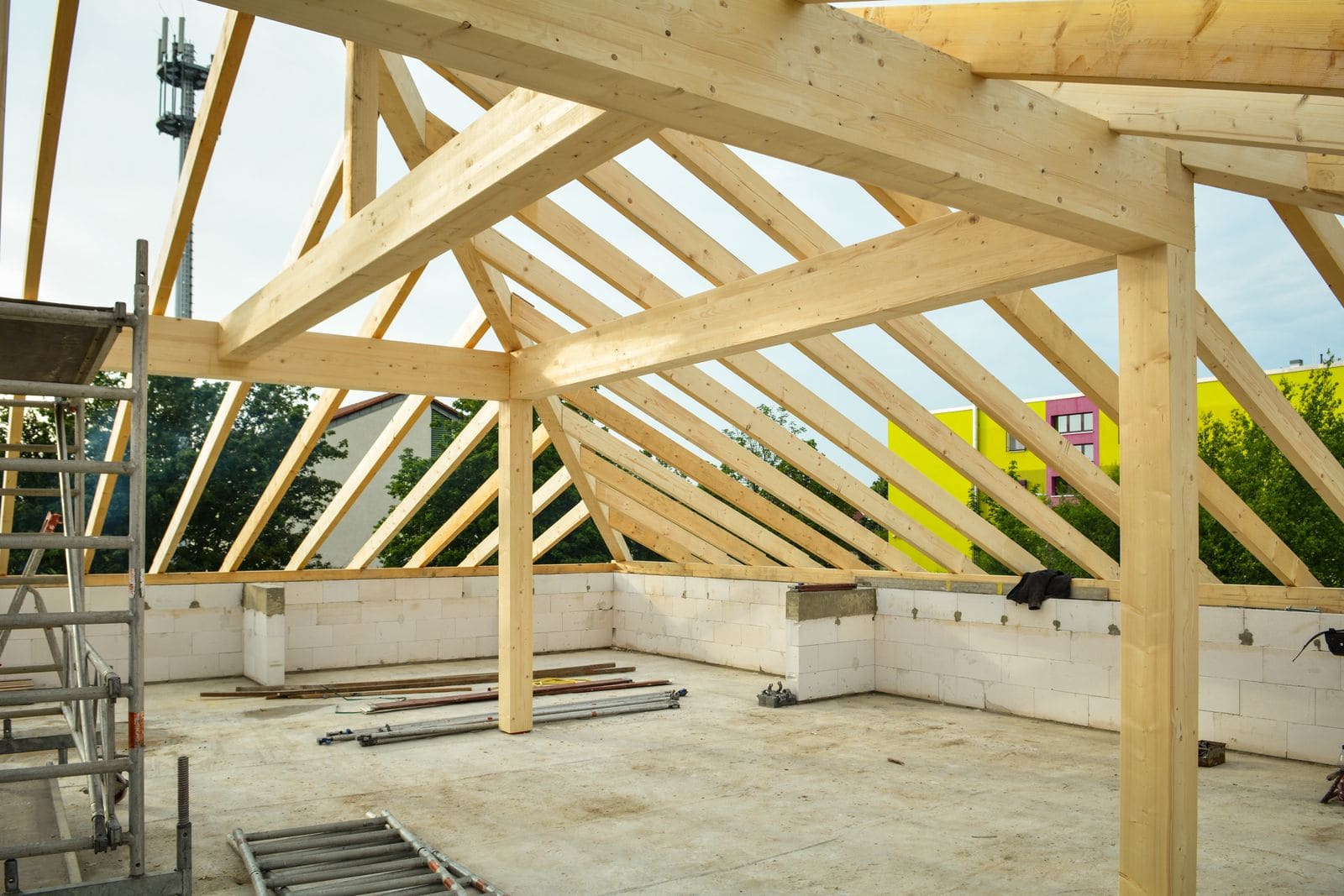
When a deck rots, it almost always rots in the substructure — where timber sits on moisture and cannot dry out. The rules are simple and constantly broken anyway: no timber in the ground. The substructure stands on point foundations or adjustable feet. Slope. Water must be able to drain; one to two percent is enough. Air. Beneath the boards you need a ventilated cavity, not battens lying flat on slabs.
What a wooden deck costs
Built by a carpenter, including the substructure: CHF 300 to 600 per m². A 25 m² deck therefore comes to CHF 8,000 to 15,000. At the lower end: simple shape, larch, good access. At the upper end: oak or thermally modified timber, hidden fixings, steps and edgings, difficult ground.
For comparison, honestly: DIY with store materials costs a third of that. If you enjoy building, have level ground and can live with visible screws, go ahead. The carpenter pays off where the deck meets the house, the ground is sloped or soft, steps are needed — or the deck simply becomes your summer living room and should look the part.
Which timber for the deck
- Larch — the Swiss standard. Affordable, robust, greys to silver. Resin pockets and fine splinters are part of its character.
- Douglas fir — similar to larch, slightly redder and calmer in appearance.
- Oak — hard, durable, refined. More expensive, and it demands a precise substructure.
- Thermally modified ash — local timber made durable by heat. Dimensionally stable, low-splinter, barefoot-friendly. Our recommendation when the budget allows.
We deliberately do not build with tropical hardwood. Not out of dogmatism, but because it simply is not necessary: thermally modified timber and oak provide durable answers from Europe.
Permit and connection to the house
A ground-level deck without a roof usually needs no permit in the canton of Zurich. As soon as it is raised, needs a railing or gets a roof, that changes — the overview is in the guide to building permits. The trickiest point in the build itself is the connection to the house: the deck must not interfere with facade drainage and has to stay below the door threshold, otherwise driving rain pools at the sill. Junctions like these are exactly why this work belongs to a carpenter. If you want to roof the deck, the costs are in the pergola and carport guide.
Maintenance: less than everyone thinks
A wooden deck needs exactly one round of care per year: a thorough sweep in spring and a clean with water and a brush so leaves and algae do not seal the surface. Oiling is a matter of taste — it keeps the colour but then has to be repeated annually. Letting the timber grey means the least work. A deck does not get slippery from the wood but from what grows on it: algae grow where water stands. If the slope is right, the surface stays grippy.
Frequently asked questions
How long does a wooden deck last?
With the right substructure: larch 15 to 25 years, oak and thermally modified timber 25 to 40. With the wrong substructure: half of that, whatever the timber.
Timber or composite decking?
Composite is low-maintenance but gets hot in the sun, ages worse visually and cannot be refurbished. Timber can be sanded, oiled, repaired. We build timber — but if you never want warm boards underfoot and never want to sweep, composite is not a wrong choice.
Does a wooden deck work on a flat roof or balcony?
Yes, on adjustable feet without penetrating the waterproofing. What matters is the permissible weight and the railing height — we check both before quoting.
Planning a deck?
Send me a photo of the spot and rough dimensions — I will tell you what the substructure needs and what the deck costs. As a carpentry business in Zurich we build it complete, from foundation to final board. The first conversation is free.