Guides · Renovation
Renovating an old house: what matters – and what applies specifically in Zurich
An old house is not a defect. It is a promise. Rooms with history, wood with patina, proportions that nobody builds like this anymore.
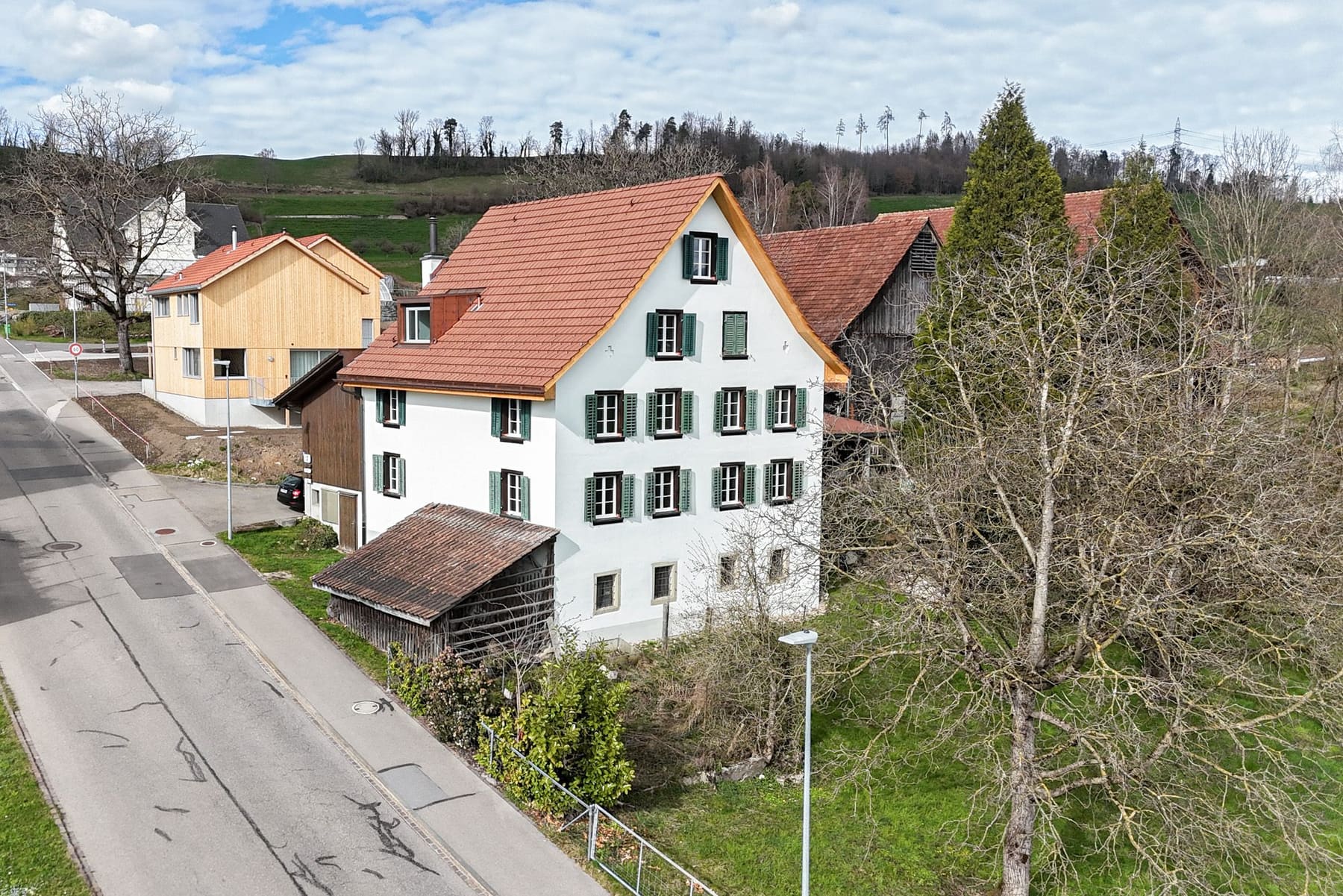
When you renovate an old house, you get something no new build can offer. But only if you stick to the right order: understand first, then plan, then build.
I am a trained carpenter and architect. Old houses are the reason I chose this profession. In this article I will show you how to approach a renovation properly. With honest numbers, the Zurich specifics and a dedicated chapter on heritage protection.
Understand first, then plan
The most common mistake with old houses: starting with the surfaces. New floors, fresh paint, a beautiful kitchen. Two years later, moisture shows up in the basement and the new kitchen has to make way for new pipes.
That is why every project starts with a survey of the existing building. Four questions decide everything that follows:
How sound is the structure? Beam layers, foundations, load-bearing walls. In houses with timber construction, I check the bearings and beam ends particularly carefully. That is where the damage sits when water has been getting in for decades.
Where is moisture at play? Rising damp in the masonry, leaking joints on the roof, condensation in poorly ventilated corners. Moisture is the root cause behind most consequential damage.
How old are the pipes and wiring? Electrics, water, wastewater, heating. Installations from the sixties and seventies are at the end of their service life. If you leave them in, you will renovate twice.
Are there hazardous materials in the house? Asbestos was used in Switzerland until 1990, in floor coverings, facade panels and pipe insulation. For houses built before 1990, a hazardous materials survey is part of the job. It costs little compared to a construction stop in the middle of the works.
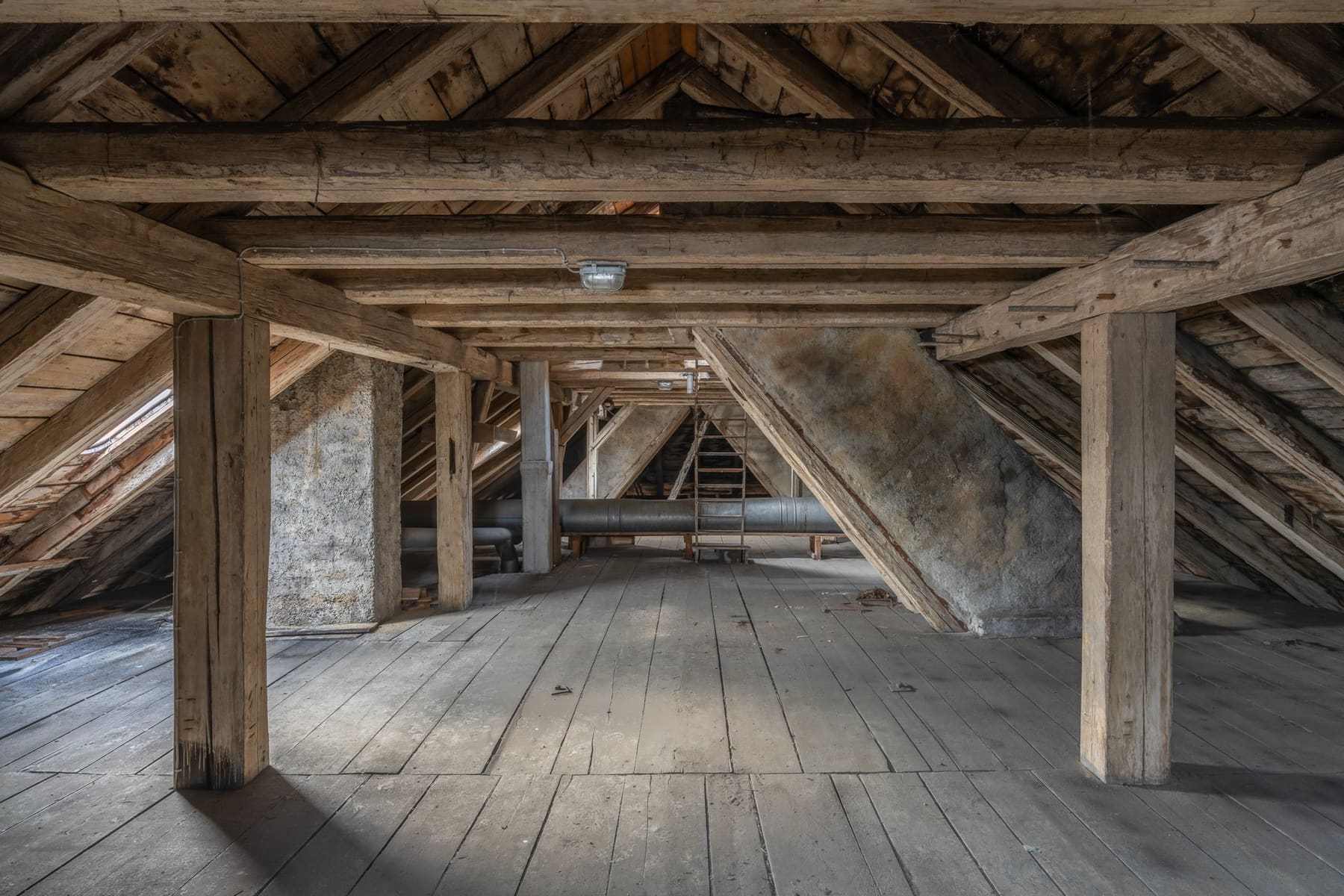
The result of this assessment is the basis for everything: for the concept, for the costs and for the decision whether the renovation is worth it at all.
What does it cost to renovate an old house?
Only ranges are honest. Every old house is different, and the condition of the fabric makes the difference. As guide values for Switzerland, based on living area:
| Scope | What gets done | Guide value per m2 |
|---|---|---|
| Refresh | Painting, floors, small repairs | CHF 200 to 500 |
| Partial renovation | Bathroom or kitchen, individual trades | CHF 500 to 1,200 |
| Full renovation | Building services, windows, insulation, bathroom, kitchen | CHF 1,200 to 2,500 |
| Gut renovation | Strip back to the structure, everything new | CHF 2,500 to 4,000 |
An example: for a single-family house with 140 m2 of living space, a full renovation comes in between CHF 170,000 and 350,000. The wide range is not an evasion. It shows how strongly condition and ambition drive the budget.
Here are the key individual items, as I see them again and again in projects:
- Bathroom renovation: CHF 25,000 to 60,000
- Kitchen: CHF 25,000 to 70,000
- Window replacement: CHF 1,000 to 1,500 per window
- Roof renovation with insulation: CHF 30,000 to 80,000
- Replacing the heating with a heat pump: CHF 35,000 to 90,000, depending on the system
And one rule I never break: 10 to 15 percent of the budget stays untouched as a contingency. Old houses hold surprises. If you plan the reserve in, you stay in control when something turns up behind the panelling.
Heritage protection in Zurich: obligation and opportunity
Many old houses in the Canton of Zurich are listed in an inventory or stand in a core zone (Kernzone). That sounds like a restriction. In practice it is more nuanced, and often it is actually a gain.
Being in the inventory is not yet protection. The canton and the municipalities keep inventories of buildings considered worthy of protection. An entry means: before you make a major intervention, it will be clarified whether and what parts of the house are protected. Only that assessment decides. As the owner you can also actively request it, to get clarity early.
For a protected building, the heritage authority has a say. If a house is formally protected, any work on the protected parts needs the approval of the heritage authority. In the city of Zurich that is the municipal heritage office, outside it the cantonal one. It is rarely the whole house that is protected. Usually it is specific elements: the facade, a staircase, a parlour with wood panelling.
The core zone protects the townscape. Even without individual protection, core zones have stricter rules on roof shape, materials and colours. If you are renovating in a village centre in Zurich, it pays to plan with these rules from the start rather than against them.
Protection also has a second side. The heritage authority is not an office of obstruction. Its advice is free, and its specialists often know old construction methods better than many a contractor. Grants can be awarded towards extra costs caused by heritage requirements. And a well-renovated protected building has a character the market pays for.
My advice from experience: get in touch with the heritage authority before the project is drawn up. An early conversation costs nothing and saves months. If you present the authority with a finished project, you are negotiating from the weakest position.
Energy: what the Zurich energy law requires
Since September 2022, a new energy law has been in force in the Canton of Zurich. For renovating old houses, three points are central:
Replacing the heating. If you replace an oil or gas heating system, you generally have to switch to a climate-neutral solution, usually a heat pump. Exceptions exist where that is technically impossible or economically unreasonable.
Insulation in moderation. With old houses, wrapping the whole building is rarely the right answer. An external insulation system over an exposed timber-frame facade destroys the value of the house. There are almost always better ways: insulate the roof and the basement ceiling, replace the windows, use interior insulation where it works cleanly in terms of building physics. Protected buildings are subject to adapted requirements anyway.

Collect the subsidies. Through the Buildings Programme (Gebäudeprogramm), the federal government and the canton support energy measures. Often the ticket in is a building energy certificate with an advisory report (GEAK Plus). The grants are worth submitting the applications before construction starts. Nobody pays retroactively.
The process in six steps

- Survey of the existing building. Fabric, hazardous materials, pipes and wiring, structure. The result: an honest condition report.
- Concept and budget frame. What stays, what goes, what gets added. A first cost estimate with a range.
- Clarifications. Municipality, heritage authority, possibly an inventory assessment. Now, not later.
- Project and permit application. Construction-ready plans, building application, permit. In the Canton of Zurich, submissions are digital these days.
- Tendering. Quotes from tradespeople who know old building fabric. With old buildings, the cheapest contractor is rarely the best value.
- Execution and acceptance. Close supervision on site. With old houses, decisions are often only made once the wall is open.
Allow six to twelve months for planning and permits combined before the first tradesperson arrives. That is not lost time. It is the time in which costs and quality are decided.
The five most common mistakes
- Stages without an overall concept. If you do the bathroom today and the pipes in three years, you pay twice.
- Surfaces before substance. First make the roof watertight, then make the parquet beautiful.
- Involving the heritage authority too late. Weeks turn into months, wishes turn into conditions.
- No contingency. Without a buffer, the first surprise forces cuts in the wrong place.
- Energy as patchwork. Individual measures without a concept block the next stage, in the worst case with moisture damage.
Frequently asked questions
Renovate, or demolish and build new?
On paper, a gut renovation often comes close to the cost of a new build. But the comparison is flawed. An old house brings qualities that would be unaffordable in a new build: location, ceiling heights, grandfathered rights, character. In core zones and for inventory-listed buildings, demolition is often not even an option. The answer needs a proper assessment, not a rule of thumb.
Can I live in the house during the renovation?
For a refresh, yes. For a partial renovation, with limitations. For full and gut renovations, I advise against it. The extra cost of temporary accommodation is smaller than the extra cost of a building site that has to work around residents.
Does a purely interior renovation need a building permit?
Interior work without a change of use generally needs no permit in the Canton of Zurich. Exceptions: structural interventions and protected building elements. When in doubt, a phone call to the municipality is enough. More on this in the article on building permits in the Canton of Zurich.
What about an inherited house?
Condition and numbers first, emotions second. A building survey with a cost estimate creates the basis on which a family can decide fairly: keep and renovate, rent out, or sell.
Do you own an old house in or around Zurich?
Then it is worth talking before you plan. I will look at your house and tell you honestly what it needs and what it costs. The first consultation is free and without obligation.