Guides · Carpentry
Wood Panelling and Timber Ceilings, Thought Through for Today
Wood panelling has a bad reputation, and it is undeserved. Between the dark parlour of the seventies and the modern timber wall lie just three decisions: species, profile, and how much of it.
Why panelling is right again
Panelling — cladding walls or ceilings with timber boards — was for centuries the normal Swiss way of making rooms warm and quiet. What ruined its reputation was not the principle but an era: dark-varnished spruce, wall to wall, floor to ceiling, with decorative mouldings. Saying panelling today means something different: one wall or one ceiling, not all of them. Light, saw-rough or soaped timber. Narrow, even profiles without ornament. The result reads not as rustic but as calm — and it ages better than any painted wall.
Then there is what you hear — or rather stop hearing: wood on the ceiling absorbs sound. In rooms with lots of glass and hard floors, a profiled timber ceiling or a slatted acoustic ceiling is the most effective cure for echo — and better looking than any retrofitted panel.
What panelling and a timber ceiling cost
| Work, installed | Guide price |
|---|---|
| Wall panelling in spruce or silver fir | CHF 80 to 150 per m² |
| Wall panelling in oak or ash | CHF 150 to 250 per m² |
| Timber ceiling, closed boards | CHF 100 to 250 per m² |
| Acoustic ceiling with slats and absorber | CHF 200 to 400 per m² |
The range comes down to species, profile and substrate. On a straight wall, panelling goes up quickly. On a crooked old wall, levelling the battens is half the work — but in return, cables, sockets and unevenness disappear behind it without any chasing or plastering.
Three decisions against the chalet effect
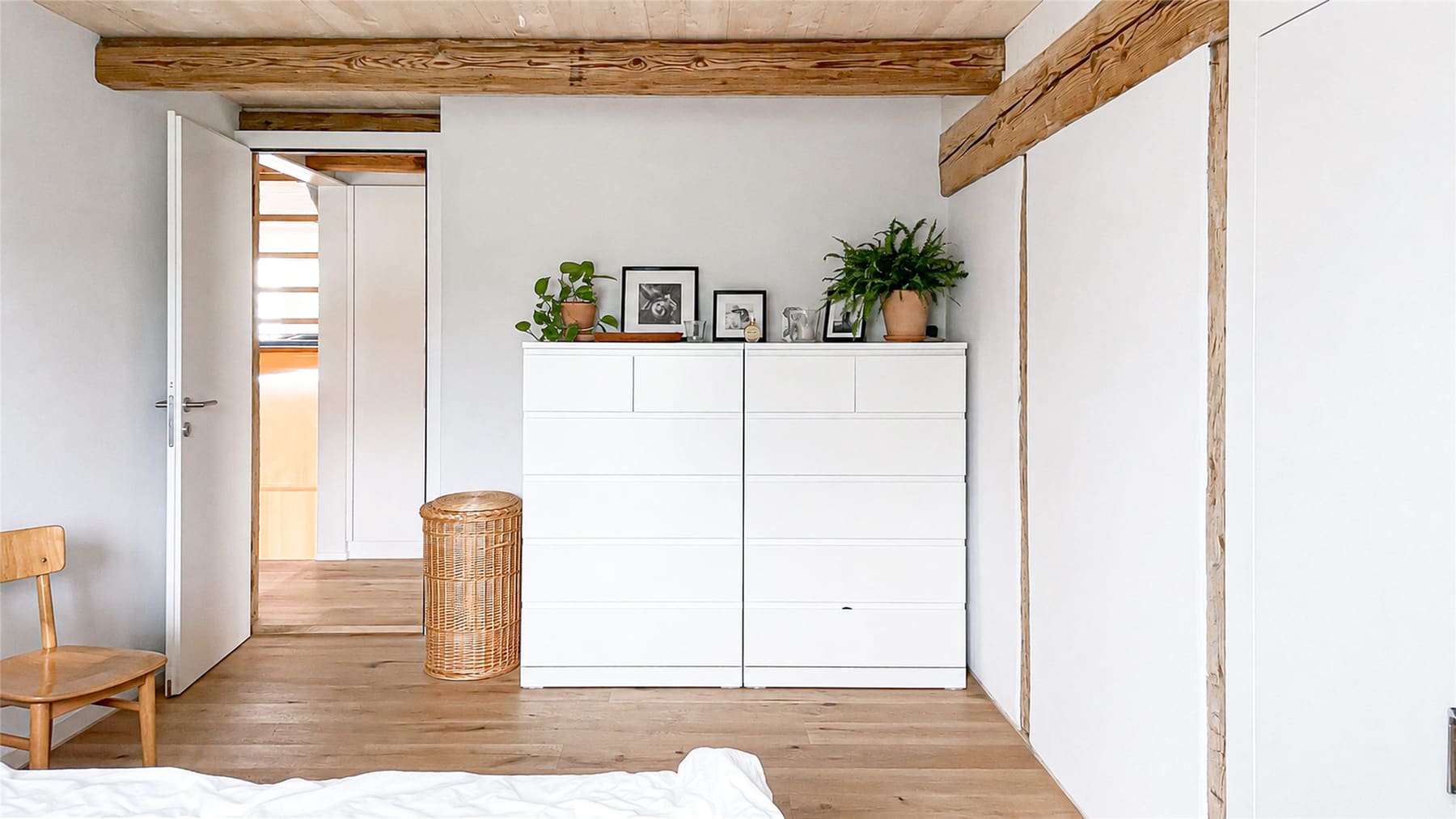
- Dosage. One surface per room. The timber wall behind the bed, the ceiling in the living room — never both all around. The remaining surfaces stay light and mineral.
- Profile. Even, narrow boards with a fine shadow gap. No rounded edges, no decorative mouldings — the calm comes from repetition.
- Surface. Soaped, oiled or left raw — never gloss-varnished. The varnish of the seventies is half of panelling's bad reputation.
Which species suits which use, and how floors, stairs and built-ins fit in, is covered in the overview interior design with wood.
Old panelling: rip out or rescue?
Not every old panelled wall belongs in the skip. Solid old timber is often better than anything you can buy today — only the surface is tired. Three routes: sand and soap if the wood may turn light. Paint in a matt, light tone if the texture should stay and the colour change — perfectly acceptable over sound old varnish. Replace if thin plywood panelling was used or moisture sat behind it. Which one applies is visible within fifteen minutes on site.
Frequently asked questions
Does wood on walls and ceilings darken a room?
Dark varnished spruce: yes. Silver fir, ash or soaped spruce: hardly — they reflect warmly instead of coldly. The surface decides, not the material.
Does a timber ceiling work in a bathroom?
Yes, with good ventilation and an open-pored surface. Wood buffers moisture better than any painted ceiling — mould grows on cold, sealed surfaces, not on warm timber.
Can panelling go over an existing ceiling?
Almost always. On battens, old plaster ceilings, stains and cables disappear — at a cost of only four to six centimetres of ceiling height.
Wood on the wall?
Send me a photo of the room — I will tell you which surface can take the wood, which species fits and what it costs. As a carpentry business in Zurich we make and fit panelling, ceilings and built-ins ourselves. The first conversation is free.