Guides · Remodelling
Bathtub to shower conversion: costs and process
The tub gets used twice a year and is in the way every day. Swapping it for a walk-in shower is the most popular small bathroom upgrade in Switzerland — and for good reason.
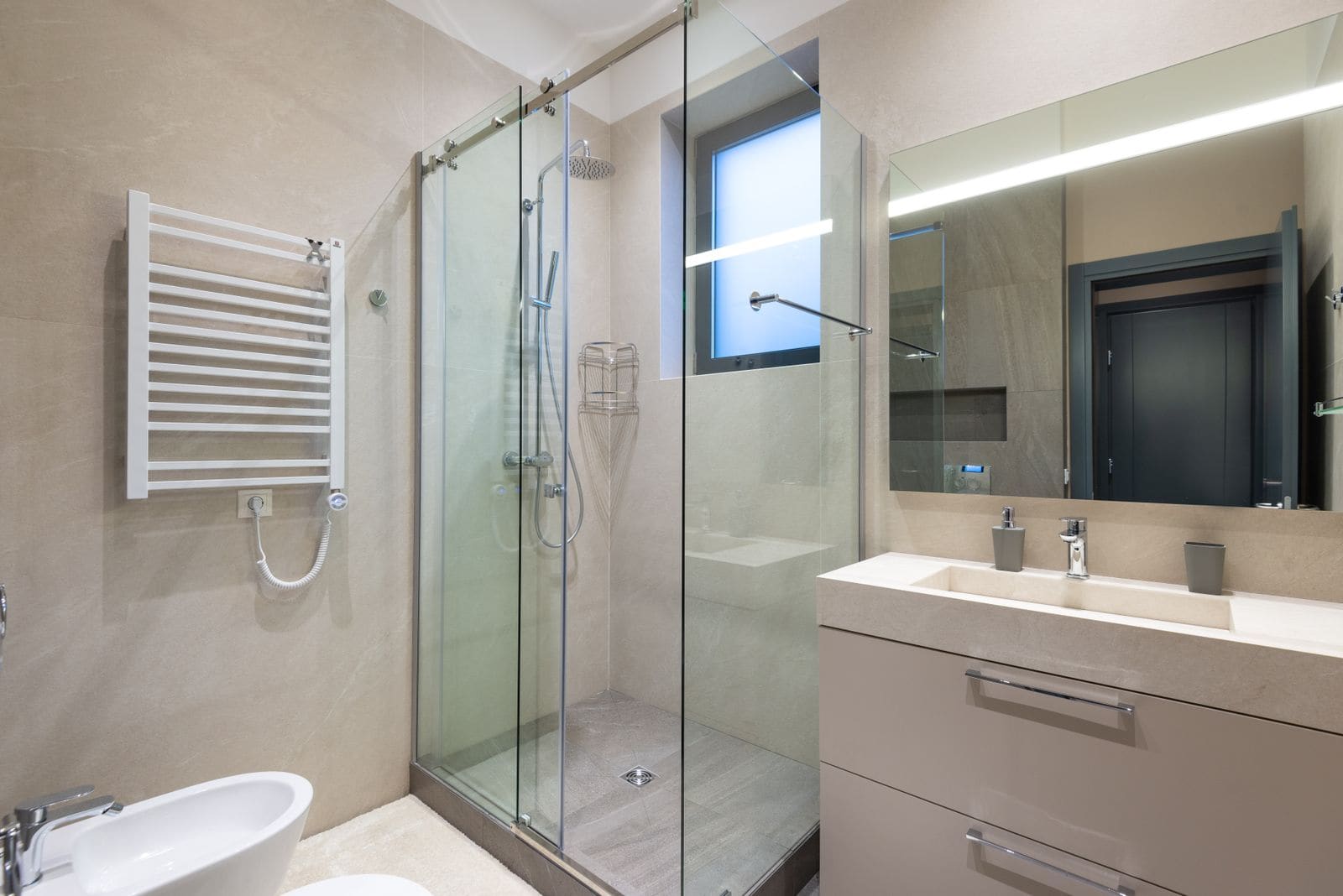
This conversion has a clear scope, a clear price and a clear timeline. That is exactly why it works as a standalone project — unlike most bathroom wishes, which are better bundled into a full remodel.
Does this need a permit?
Usually not. The swap happens inside the flat, the facade stays untouched and nothing changes structurally. In the Canton of Zurich such work is therefore mostly not a matter for the building office. It looks different if you move a wall or enlarge a window at the same time.
You still need agreement, just from someone else. From the landlord if you rent, from the owners' meeting in a condominium as soon as the service shaft is touched. And on price: in the city of Zurich hourly rates are higher than in the surrounding area. Across a small conversion that quickly adds up to a few hundred francs.
Costs and duration

Expect CHF 8,000 to 15,000, including removing the tub, a new drain, waterproofing, tiling in the shower area, a glass partition and the fittings. Construction takes about a week. It gets more expensive if the drain has to be relocated in the floor and the floor build-up is shallow — a site visit reveals that, not the construction site.
This conversion needs no building permit (Baubewilligung): it is an interior renovation with no change of use. The usual exception: listed buildings.

Why a walk-in shower is the right choice
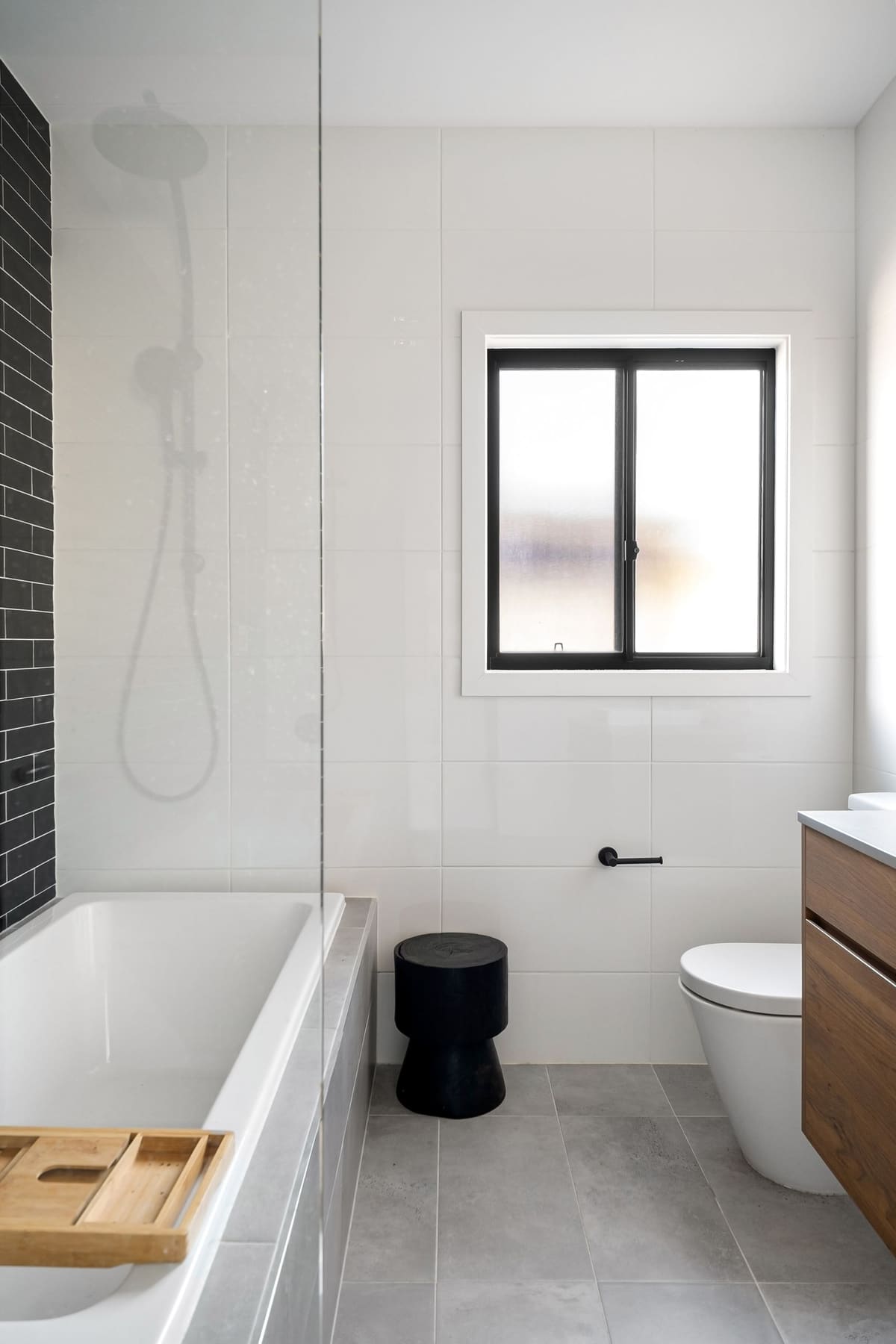
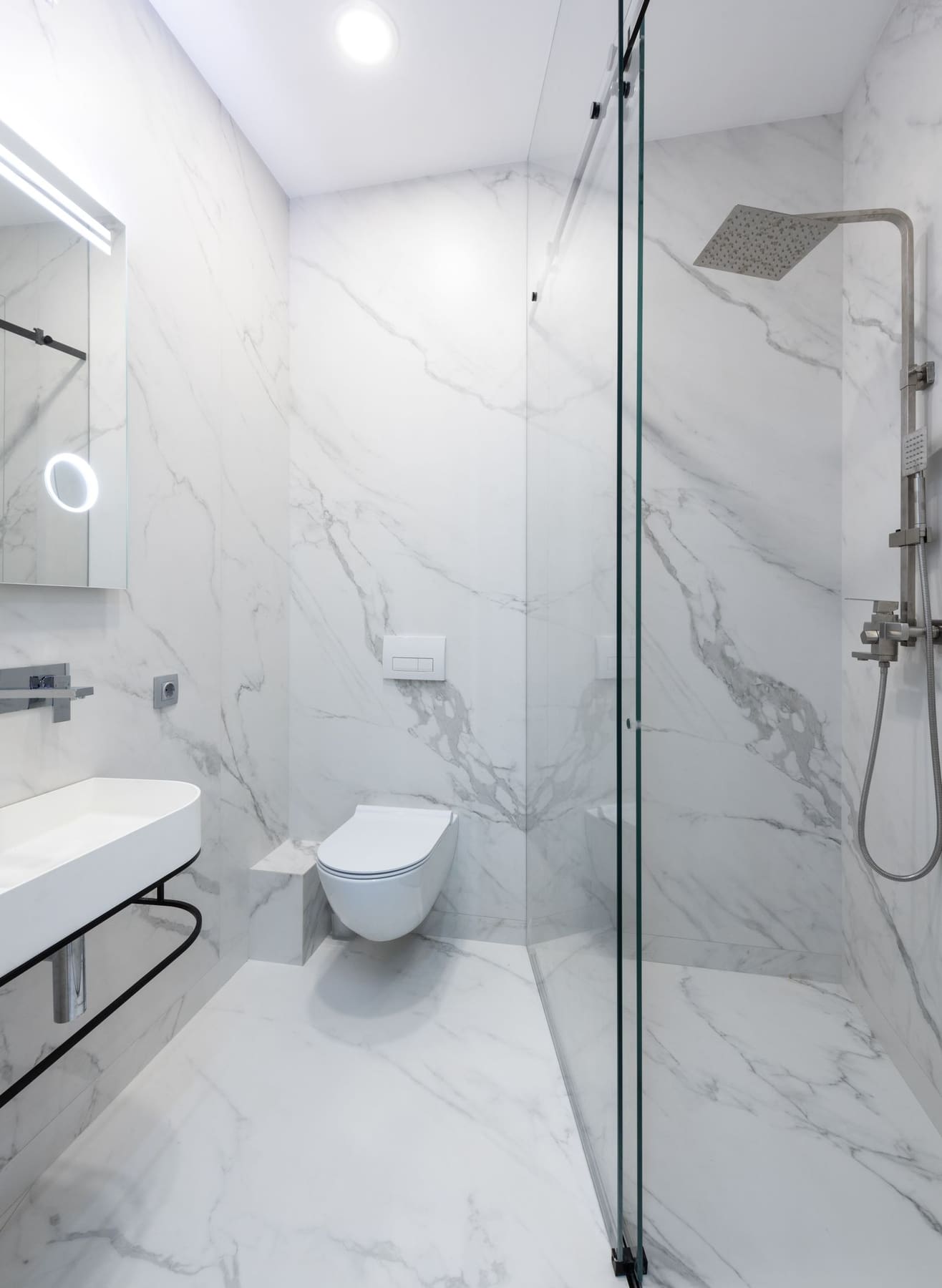
At 60 centimetres, the rim of the tub is the tallest obstacle in your home. A walk-in shower removes it entirely: no step, nothing to trip over, cleaned with a squeegee in one minute. Converting today automatically prepares the bathroom for growing older — without making it look like a care home. Grab rails can be prepared by placing reinforcements in the wall at the right spots. Costs almost nothing during the conversion, saves a lot later.
The process
- Site visit. Floor build-up, drain position, condition of the walls behind the tub. After that, the fixed price stands.
- Days 1 to 2: tub out, strip back the wall area, set the drain.
- Days 2 to 3: sloped screed and waterproofing — the most important step, invisible and non-negotiable.
- Days 3 to 4: tiles and grouting.
- Day 5: glass panel, fittings, silicone joints, handover with a leak test.
Frequently asked questions
Does removing the bathtub lower the value of my home?
In family apartments with only one bathroom, some buyers do want a tub. In every other case, the generous walk-in shower is the selling point today — not the tub.
Can I do this in a rented apartment?
Only with written consent from the property management. In older buildings the odds are good — the conversion adds value and many landlords contribute to the cost.
Will the old tiles match?
Rarely perfectly. The honest solution: design the shower area deliberately as a new surface instead of hunting for tiles that are no longer made. Contrast suits a bathroom better than almost-matching.
Ready to lose the tub?
After a site visit I will tell you what the conversion costs in your bathroom — as a fixed price, not an estimate. The first consultation is free and without obligation.